Galapagos Travel: The Best Places for Nighttime Wildlife Observation
When most travelers think of wildlife watching in the Galapagos Islands, they picture sunny days filled with blue-footed boobies, giant tortoises, and marine iguanas basking on volcanic rocks. However, some of the archipelago’s most fascinating creatures emerge only when darkness falls. From nocturnal seabirds to hunting sharks and bioluminescent marine life, the Galapagos transforms into an entirely different ecosystem after sunset.
Nighttime wildlife observation in the Galapagos offers visitors a rare glimpse into behaviors and species that remain hidden during daylight hours. The islands’ unique position at the convergence of several ocean currents, combined with minimal light pollution, creates perfect conditions for observing nocturnal wildlife. Whether you’re an experienced naturalist or a curious traveler, exploring the Galapagos after dark will reveal secrets that few visitors ever witness.
Why Nighttime Wildlife Watching is Special in the Galapagos
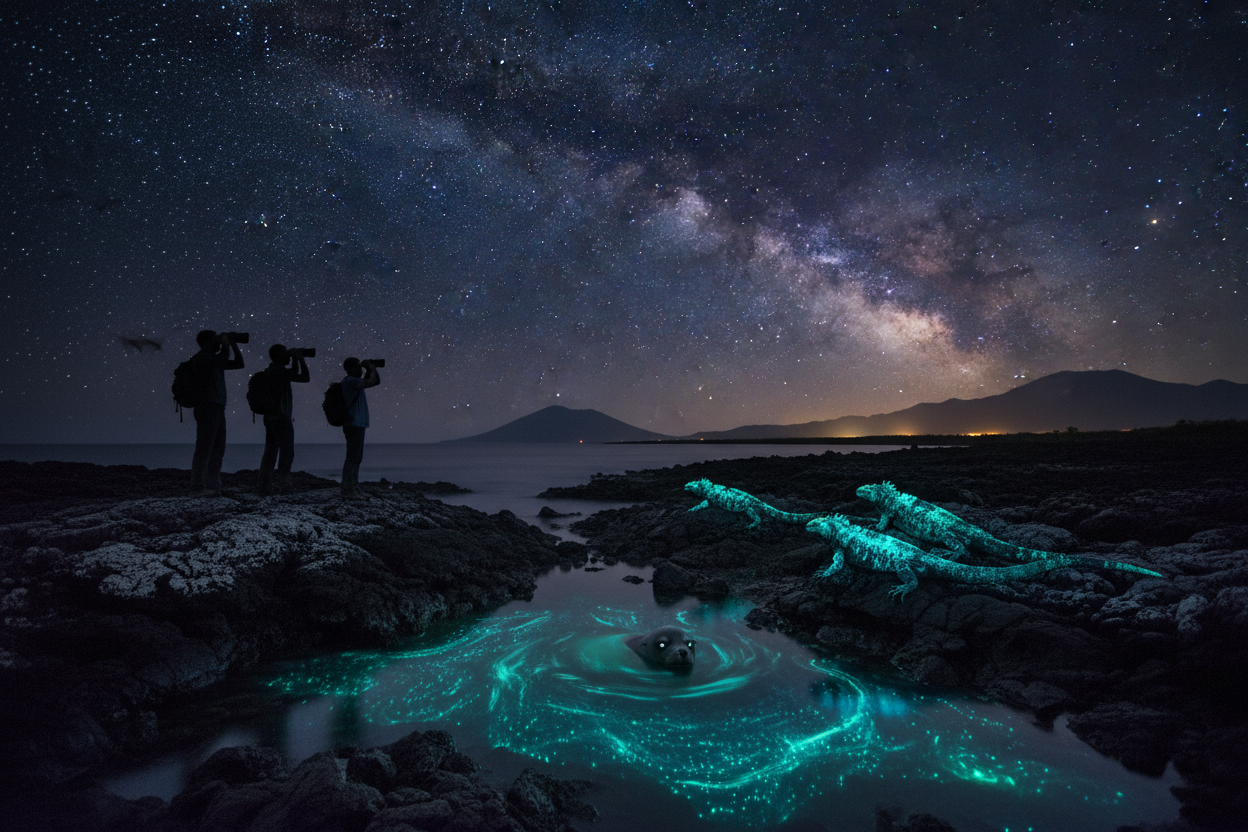
The Galapagos Islands possess several characteristics that make nighttime wildlife observation exceptionally rewarding. The archipelago’s isolation from mainland Ecuador means virtually no light pollution affects most islands, creating pristine conditions for observing both terrestrial and marine nocturnal species. Additionally, the islands’ volcanic landscape provides diverse habitats where different species have evolved unique nighttime behaviors.
Many Galapagos species exhibit fascinating nocturnal adaptations that developed over millions of years of evolution. These adaptations allow animals to avoid daytime predators, hunt more effectively, or take advantage of cooler temperatures. The absence of natural predators on many islands has also allowed some species to maintain behaviors that would be too risky in other environments.
The convergence of the Humboldt, Panama, and Cromwell currents around the islands brings nutrient-rich waters that support abundant marine life. At night, many deep-sea species migrate closer to the surface, creating opportunities to observe creatures rarely seen during daylight hours. This phenomenon, known as diel vertical migration, makes the Galapagos waters particularly exciting for nighttime marine observation.
Santa Cruz Island: Nocturnal Giants and Seabird Colonies
Santa Cruz Island offers some of the most accessible nighttime wildlife experiences in the Galapagos. The island’s diverse ecosystems, from coastal areas to highland forests, support various nocturnal species that visitors can observe with relative ease.
The highlands of Santa Cruz transform dramatically after sunset. Giant tortoises, which often rest in shaded areas during hot days, become more active in the cooler evening hours. Observing these ancient reptiles moving through the misty highland vegetation under starlight provides an almost prehistoric atmosphere. Local guides know the best locations where tortoises gather to feed on night-blooming plants and can lead visitors to these magical encounters.
Puerto Ayora’s harbor area becomes a hub of nocturnal marine activity. White-tip reef sharks patrol the shallow waters near the dock, their sleek forms visible in the harbor lights. These relatively small sharks pose no threat to humans and offer excellent opportunities for nighttime observation from the pier. Sea lions also become more playful after dark, often swimming in the illuminated areas where they’re easier to spot.
The Scalesia forests of Santa Cruz host several endemic bird species that are most active during twilight hours. The Galapagos short-eared owl, one of the islands’ few native predators, begins hunting as daylight fades. These owls have adapted to hunt during both day and night, making them more visible than typical owl species. Their distinctive facial discs and silent flight make encounters particularly memorable.
Española Island: Waved Albatross Nighttime Behaviors
Española Island, the southernmost island in the Galapagos, provides unique opportunities to observe the famous waved albatross during their nighttime activities. These magnificent seabirds, found nowhere else on Earth, exhibit fascinating nocturnal behaviors that differ significantly from their daytime routines.
During breeding season, which occurs from April to December, waved albatross pairs engage in elaborate courtship rituals that often extend into the evening hours. The birds’ distinctive calls echo across the island’s cliffs as pairs reinforce their bonds through synchronized dancing and bill fencing. Observing these ancient rituals under the soft light of dusk creates an unforgettable experience.
The island’s rocky shores become active feeding grounds for various seabird species after sunset. Storm petrels, small seabirds that spend most of their lives at sea, return to their nesting sites under cover of darkness to avoid predation. These tiny birds create a fascinating spectacle as they navigate between rocks and crevices using their exceptional night vision.
Española’s marine environment also offers exceptional nighttime snorkeling opportunities. The island’s location in the path of the Humboldt Current brings cold, nutrient-rich waters that support diverse marine life. At night, many species that hide in deeper waters during the day move into shallower areas, creating opportunities to encounter species like octopi, eels, and various ray species that are rarely seen during daylight hours.
Fernandina Island: Pristine Nocturnal Ecosystems
Fernandina Island, the youngest and most pristine island in the Galapagos, offers perhaps the most authentic nighttime wildlife experience available in the archipelago. The island’s lack of introduced species and minimal human impact has preserved nocturnal ecosystems in their original state.
The island’s extensive lava flows create unique microhabitats where endemic species have evolved specialized nighttime behaviors. Galapagos penguins, typically associated with daytime activities, often hunt at night around Fernandina’s shores. These tropical penguins have adapted to hunt during cooler nighttime hours, diving for small fish and squid that move closer to the surface after dark.
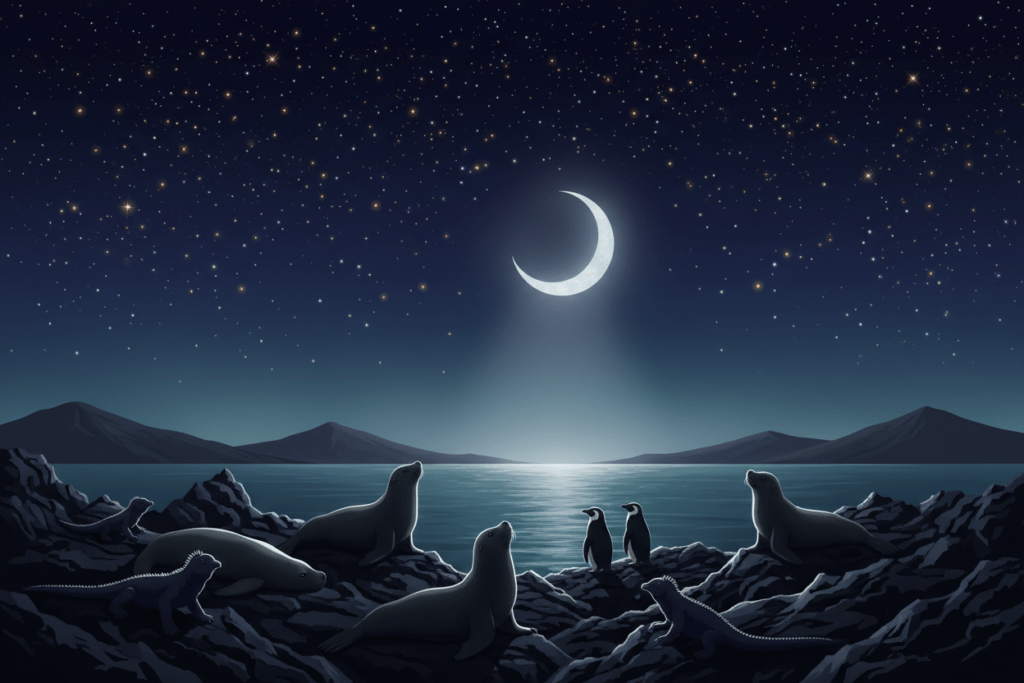
Marine iguanas on Fernandina exhibit different nighttime behaviors compared to other islands. The cooler nighttime temperatures cause these reptiles to cluster together for warmth, creating impressive aggregations along the rocky shorelines. Observing hundreds of marine iguanas huddled together under starlight provides insight into their social behaviors and thermal regulation strategies.
The waters surrounding Fernandina become particularly active at night due to upwelling currents that bring deep-sea nutrients to the surface. This phenomenon attracts various marine species, including dolphins, whales, and large schools of fish. Night diving or snorkeling around Fernandina can reveal encounters with species rarely seen elsewhere in the Galapagos, including deep-sea squid and various bioluminescent organisms.
North Seymour Island: Frigate Birds and Night Fishing
North Seymour Island provides excellent opportunities to observe the nighttime behaviors of frigate birds, some of the most impressive aerial predators in the Galapagos. These large seabirds exhibit fascinating nocturnal hunting strategies that showcase their remarkable adaptability.
Magnificent frigate birds often extend their fishing activities into the evening hours, taking advantage of reduced competition from other seabird species. Their exceptional eyesight allows them to spot fish near the surface even in low light conditions. Watching these skilled aerial pirates execute precise dives and surface skimming maneuvers under twilight skies demonstrates their mastery of marine hunting.
The island’s blue-footed booby colonies also provide interesting nighttime observation opportunities. While these birds are primarily diurnal, breeding pairs often engage in nest maintenance and chick feeding activities that extend into the evening. The distinctive calls of parent birds returning to their nests create a symphony of sounds that fills the island’s air after sunset.
North Seymour’s rocky shores attract various nocturnal marine species. Sally lightfoot crabs become more active after dark, scavenging along the tide pools and rocky crevices. Their bright red coloration becomes even more striking under artificial lighting, and their quick movements across the volcanic rocks create an entertaining spectacle for nighttime visitors.
Genovesa Island: The Ultimate Night Birding Destination
Genovesa Island, often called “Bird Island,” transforms into a nocturnal paradise that offers some of the most spectacular night birding experiences in the world. The island’s unique geography and abundant seabird populations create unparalleled opportunities for observing nocturnal avian behaviors.
Red-footed boobies, which nest in the island’s mangrove trees, exhibit fascinating nighttime behaviors during breeding season. These agile seabirds often return to their nests after dark, creating a constant stream of activity in the mangrove colonies. Their distinctive calls and the rustling of wings create an immersive audio experience that accompanies the visual spectacle of hundreds of birds navigating through the darkness.
Genovesa hosts one of the largest colonies of storm petrels in the Galapagos. These small seabirds are strictly nocturnal on land, spending daylight hours far out at sea and returning to their nesting sites only after complete darkness. The experience of walking among thousands of these tiny birds as they navigate between rocks and crevices using echolocation-like calls is truly extraordinary.
The island’s Darwin Bay provides exceptional nighttime snorkeling opportunities. The bay’s protected waters become a feeding ground for various marine species after dark. Hammerhead sharks, typically found in deeper waters during the day, often patrol the bay’s entrance at night. The combination of calm waters and abundant marine life makes Darwin Bay one of the best locations for nighttime underwater observation in the Galapagos.
Essential Tips for Nighttime Wildlife Observation
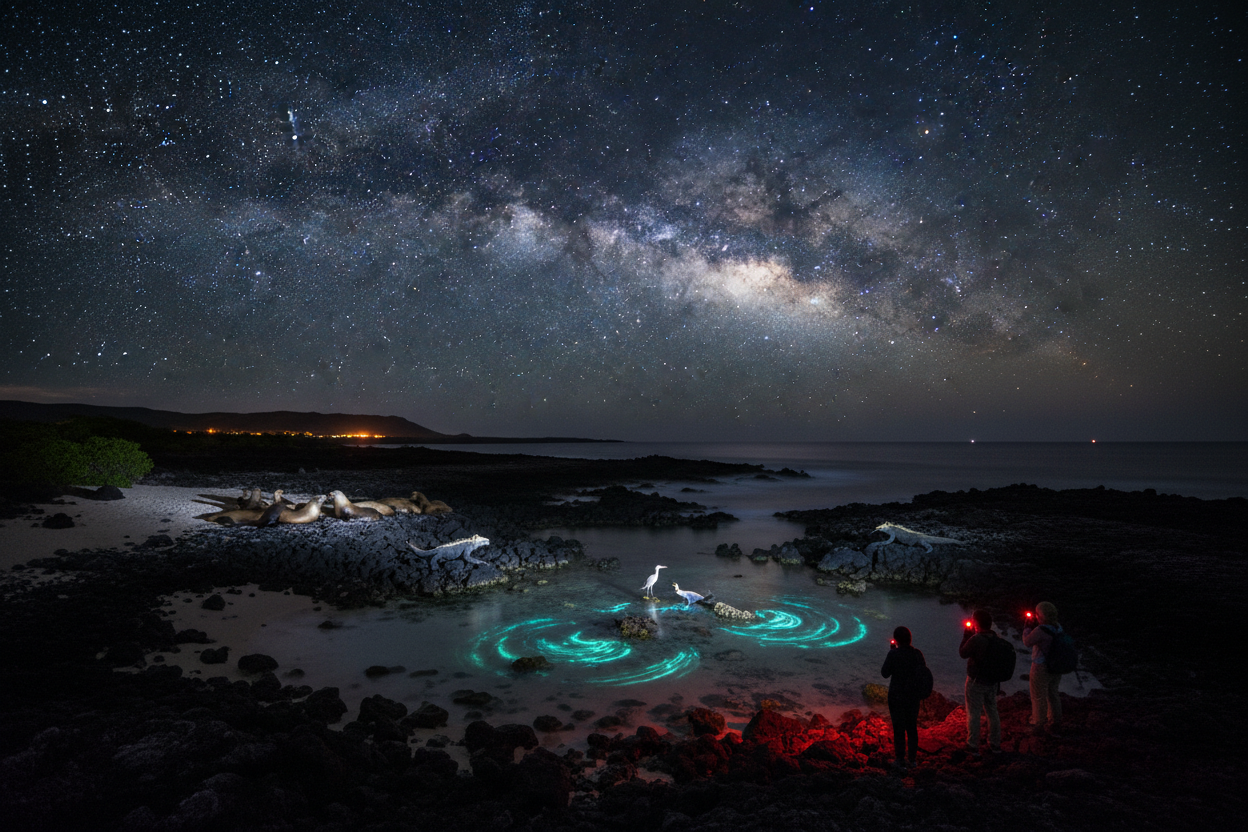
Successful nighttime wildlife observation in the Galapagos requires careful planning and appropriate equipment. Red flashlights are essential for maintaining night vision while providing enough illumination to navigate safely. Many nocturnal animals are sensitive to bright white light, which can disrupt their natural behaviors or cause them to flee.
Weather conditions play a crucial role in nighttime wildlife activity. Clear, calm nights typically provide the best observation conditions, while windy or rainy weather can significantly reduce animal activity. Checking weather forecasts and planning flexible itineraries allows visitors to maximize their chances of successful nighttime encounters.
Working with experienced local guides is particularly important for nighttime activities. These guides possess intimate knowledge of animal behavior patterns, optimal viewing locations, and safety considerations specific to each island. Their expertise can make the difference between a mediocre experience and an unforgettable wildlife encounter.
Patience becomes even more critical during nighttime observation. Many nocturnal animals are naturally more cautious and may take time to resume normal activities after human presence is detected. Remaining still and quiet for extended periods often rewards visitors with more natural behaviors and closer encounters.
Conservation Considerations for Nighttime Visits
Nighttime wildlife observation in the Galapagos requires heightened awareness of conservation principles. Many nocturnal species are particularly sensitive to disturbance, and inappropriate human behavior can have lasting impacts on animal populations and ecosystems.
Light pollution poses a significant threat to nocturnal wildlife, particularly seabirds that rely on natural light cues for navigation. Visitors must use appropriate lighting equipment and follow strict guidelines to minimize their impact on natural behaviors. This includes using red lights, avoiding unnecessary illumination, and never using flash photography without explicit permission from guides.
Noise pollution can be even more disruptive at night when many animals rely heavily on acoustic communication. Maintaining quiet voices and minimizing equipment noise helps preserve the natural soundscape that nocturnal species depend on for hunting, mating, and predator avoidance.
Staying on designated trails becomes even more critical during nighttime visits. Many nocturnal animals use specific pathways and resting areas that may not be obvious to visitors. Straying from established routes can inadvertently disturb nesting sites or interrupt important behaviors.
Conclusion
Nighttime wildlife observation in the Galapagos Islands opens a window into a hidden world that few travelers ever experience. From the prehistoric movements of giant tortoises in Santa Cruz’s highlands to the aerial ballet of storm petrels on Genovesa Island, each location offers unique opportunities to witness behaviors and species that remain invisible during daylight hours.
The islands’ pristine nighttime environments, minimal light pollution, and diverse ecosystems create perfect conditions for observing nocturnal adaptations that have evolved over millions of years. Whether watching waved albatross courtship rituals on Española or encountering hunting sharks in Puerto Ayora’s harbor, these experiences provide profound insights into the natural world’s complexity and beauty.
Planning nighttime wildlife activities requires careful consideration of conservation principles, safety measures, and appropriate equipment. Working with experienced guides and maintaining respect for wildlife ensures that these magical experiences remain available for future generations while minimizing human impact on fragile ecosystems.
For travelers seeking to deepen their connection with the natural world, nighttime wildlife observation in the Galapagos represents an unparalleled opportunity. These encounters with nocturnal species reveal the islands’ true biological richness and provide memories that last a lifetime. The darkness that initially seems like a barrier to wildlife observation actually becomes a gateway to discovering some of the most remarkable creatures and behaviors on our planet.