Bhutan Travel: A Guide to the Best Nature Reserves
Nestled in the heart of the Eastern Himalayas, Bhutan stands as one of the world’s last remaining carbon-negative countries, where pristine wilderness and ancient traditions coexist in perfect harmony. This mystical kingdom, often called the “Last Shangri-La,” offers travelers an extraordinary opportunity to explore some of Asia’s most spectacular nature reserves. With over 70% of its land covered in forests and a constitutional mandate to maintain at least 60% forest coverage for all time, Bhutan represents a conservation success story unlike anywhere else on Earth.
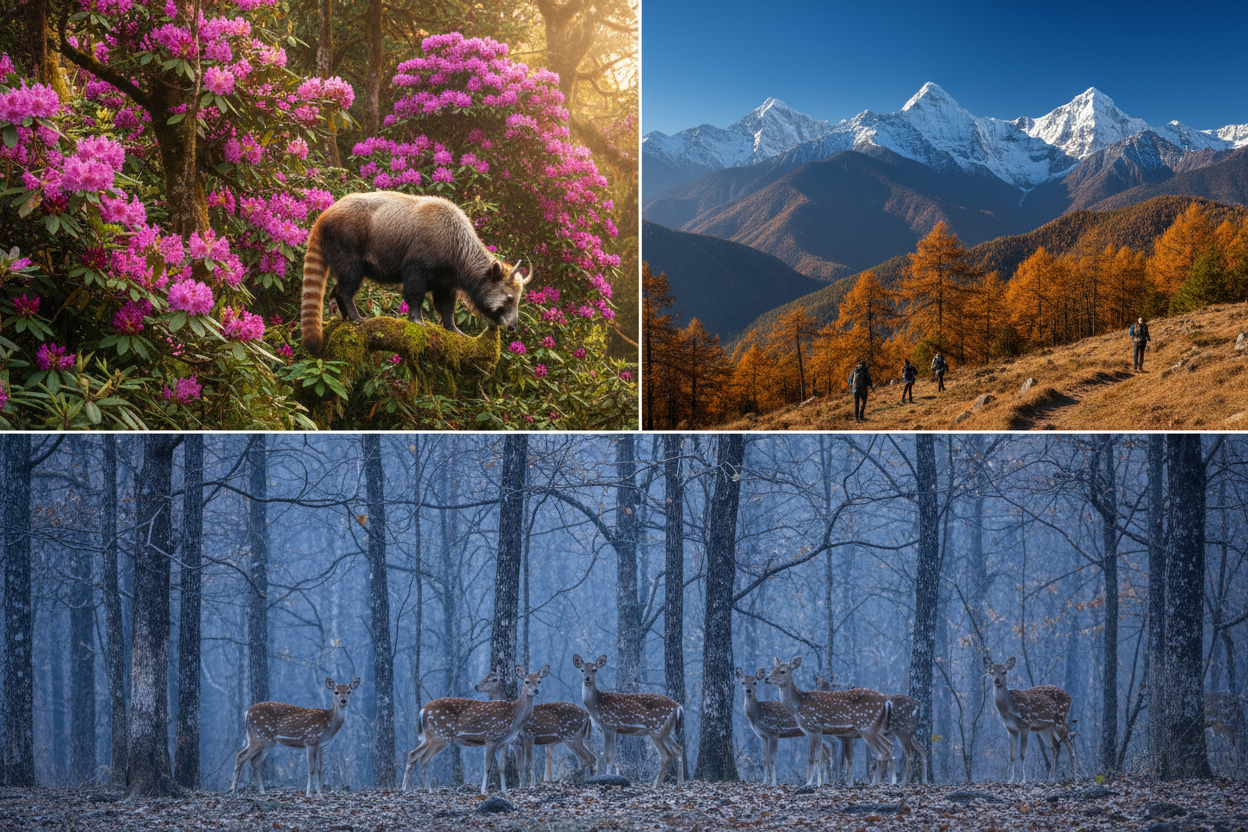
For nature enthusiasts and adventure seekers, Bhutan’s protected areas serve as sanctuaries for rare wildlife, including the elusive snow leopard, Bengal tiger, and the iconic takin – the country’s national animal. These reserves not only protect biodiversity but also offer visitors transformative experiences that connect them deeply with nature’s raw beauty and power.
Royal Manas National Park: The Crown Jewel of Bhutan’s Wildlife
Spanning across 1,057 square kilometers in southern Bhutan, Royal Manas National Park stands as the country’s oldest and most biodiverse protected area. Established in 1966, this UNESCO World Heritage site serves as a critical corridor connecting Bhutan’s lowland forests with India’s Manas Tiger Reserve, creating one of the most significant transboundary conservation areas in the region.
The park’s diverse ecosystems range from tropical grasslands to dense subtropical forests, supporting an incredible array of wildlife. Visitors often describe their first encounter with the park’s resident Bengal tigers as life-changing, though these magnificent cats require patience and luck to spot. More commonly observed are the Asian elephants that migrate through the park seasonally, creating unforgettable moments for wildlife photographers and nature lovers alike.
What makes Royal Manas particularly special is its rich avian diversity, with over 365 bird species recorded within its boundaries. The park serves as a paradise for birdwatchers, offering opportunities to spot rare species like the Pallas’s fish eagle, great hornbill, and the beautiful Rufous-necked hornbill. The best time to visit is between November and March when the weather is pleasant, and wildlife sightings are more frequent.
Jigme Dorji National Park: High Altitude Wilderness Adventure
Covering an impressive 4,316 square kilometers, Jigme Dorji National Park represents Bhutan’s largest protected area and encompasses some of the most dramatic landscapes in the Himalayas. Named after the late father of the fourth King of Bhutan, this park stretches from temperate forests at 1,400 meters to alpine peaks soaring above 7,000 meters, including the sacred Jomolhari mountain.
The park’s crown jewel is undoubtedly its snow leopard population, one of the healthiest in the world. These ghost cats of the mountains roam the high-altitude regions, and while spotting one requires exceptional fortune, the mere possibility adds an electric excitement to every trek. The park also protects significant populations of blue sheep, Himalayan black bears, and the rare Bhutan takin in their natural highland habitat.
Trekkers often choose Jigme Dorji National Park for its spectacular high-altitude trails, particularly the Jomolhari Base Camp trek, which offers breathtaking views of snow-capped peaks and pristine alpine lakes. The park’s diverse altitudinal zones create distinct microclimates, supporting everything from rhododendron forests that bloom spectacularly in spring to high-altitude meadows carpeted with rare medicinal plants.
Thrumshingla National Park: The Heart of Bhutan’s Biodiversity
Strategically positioned in central Bhutan, Thrumshingla National Park serves as a crucial biological corridor connecting the country’s northern and southern ecosystems. Covering 905 square kilometers, this park plays a vital role in maintaining genetic diversity among wildlife populations by facilitating animal movement across different habitat zones.
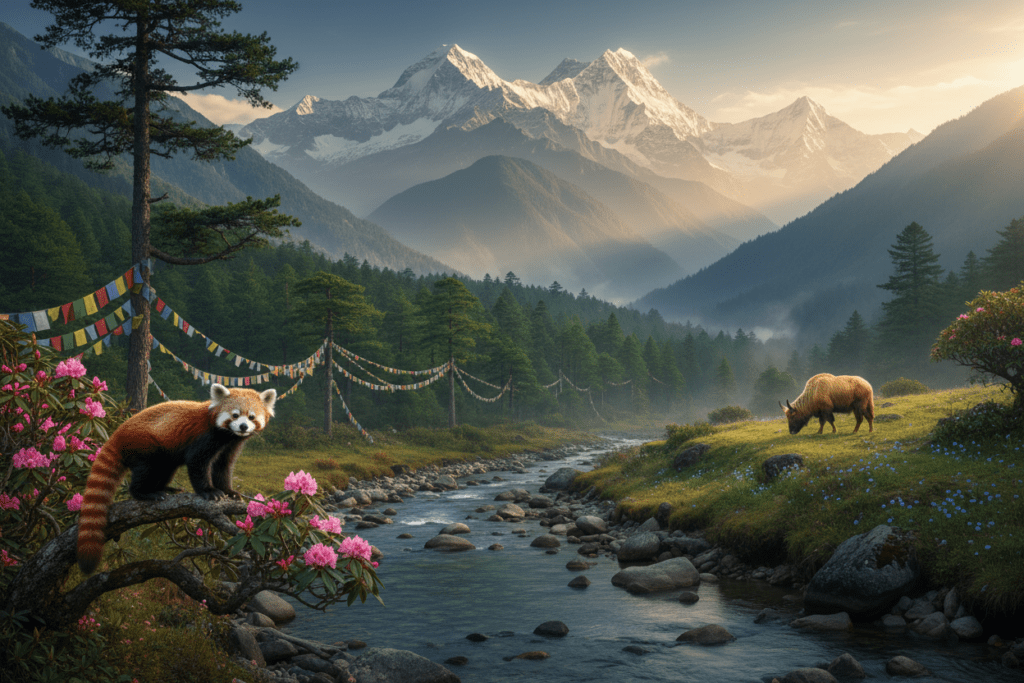
The park’s mixed conifer and broadleaf forests create ideal conditions for Bhutan’s national animal, the takin, which can often be observed grazing in the park’s meadows during early morning hours. These unique creatures, with their distinctive golden-brown coats and robust build, appear almost mythical as they navigate the misty mountain slopes.
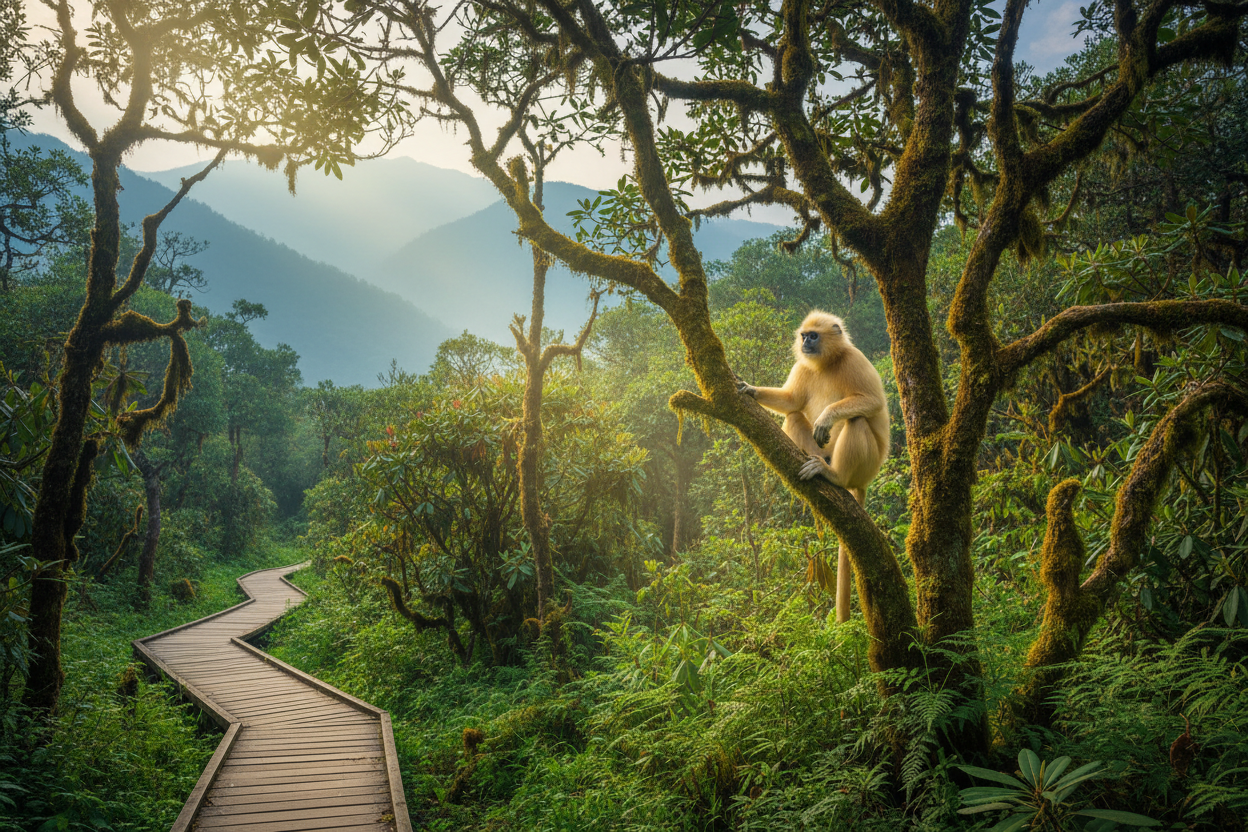
Thrumshingla is also renowned for its primate populations, including the endangered golden langur, whose populations are found nowhere else in the world outside of Bhutan and a small area of Assam, India. The park’s relatively accessible location makes it an excellent choice for travelers with limited time who still want to experience Bhutan’s incredible biodiversity firsthand.
Wangchuck Centennial Park: Bhutan’s Newest Conservation Success
Established in 2008 to commemorate the centenary of the Wangchuck dynasty, this massive 4,914 square kilometer park represents Bhutan’s commitment to expanding protected areas for future generations. Located in north-central Bhutan, the park encompasses some of the most remote and pristine wilderness areas in the kingdom.
The park’s high-altitude environment provides critical habitat for snow leopards, with recent camera trap studies revealing healthy populations throughout the region. The park also protects significant populations of blue sheep, Himalayan wolves, and brown bears, creating a complete high-altitude ecosystem that remains largely untouched by human influence.
What sets Wangchuck Centennial Park apart is its role in climate change research and conservation. The park’s glaciers and alpine environments serve as important indicators of climate change impacts in the Himalayas, making it not just a conservation area but also a living laboratory for understanding mountain ecosystem dynamics.
Bumdeling Wildlife Sanctuary: A Birdwatcher’s Paradise
Located in northeastern Bhutan, Bumdeling Wildlife Sanctuary covers 1,520 square kilometers of diverse habitats ranging from subtropical forests to alpine meadows. This sanctuary holds special significance as the winter roosting ground for the endangered black-necked cranes, which migrate here annually from the Tibetan plateau.
The arrival of these magnificent cranes each October transforms the sanctuary into a celebration of nature’s resilience and beauty. Local communities have developed a deep spiritual connection with these birds, considering them sacred messengers. Visitors during crane season often find themselves moved by the sight of these elegant birds performing their courtship dances against the backdrop of snow-capped mountains.
Beyond the famous cranes, Bumdeling supports diverse wildlife including red pandas, Himalayan black bears, and over 100 bird species. The sanctuary’s community-based conservation approach demonstrates how local involvement can create successful wildlife protection while providing sustainable livelihoods for rural communities.
Planning Your Nature Reserve Adventure in Bhutan
Visiting Bhutan’s nature reserves requires careful planning due to the country’s “High Value, Low Impact” tourism policy. All international visitors must book through licensed tour operators and pay a Sustainable Development Fee, which directly supports conservation efforts and community development projects.
The best time to visit most reserves is during the dry seasons: October to December and March to May. Each season offers unique experiences – spring brings blooming rhododendrons and active wildlife, while autumn provides clear mountain views and comfortable trekking conditions. Winter visits to lower altitude parks like Royal Manas can be particularly rewarding for wildlife spotting.
Accommodation options range from basic camping to comfortable eco-lodges, with most reserves offering guided tours led by knowledgeable local naturalists. These guides possess intimate knowledge of wildlife behavior and local ecosystems, significantly enhancing the chances of meaningful wildlife encounters while ensuring visitor safety.
Conservation Impact and Responsible Tourism
Bhutan’s approach to nature conservation extends far beyond simply protecting wilderness areas. The country’s Gross National Happiness philosophy integrates environmental conservation with cultural preservation and sustainable development, creating a holistic model that other nations increasingly study and admire.
Visitors to Bhutan’s nature reserves become part of this conservation story through their tourism fees, which directly fund park management, anti-poaching efforts, and community development programs. This sustainable tourism model ensures that local communities benefit from conservation while maintaining their traditional lifestyles and cultural practices.
The success of Bhutan’s conservation efforts is evident in increasing wildlife populations and expanding forest coverage. Recent surveys show growing numbers of tigers, snow leopards, and other flagship species, proving that the country’s conservation model works effectively when properly implemented and supported.
Bhutan’s nature reserves offer more than just wildlife viewing opportunities – they provide transformative experiences that reconnect visitors with the natural world while supporting one of the world’s most successful conservation models. From the lowland jungles of Royal Manas to the high-altitude wilderness of Jigme Dorji National Park, each reserve tells a unique story of conservation success and natural wonder. For travelers seeking authentic wilderness experiences while contributing to meaningful conservation efforts, Bhutan’s protected areas represent destinations where adventure, education, and environmental stewardship converge in perfect harmony. The memories created in these pristine landscapes often inspire visitors to become conservation advocates in their own communities, extending Bhutan’s conservation message far beyond its borders.