
Ecuador Travel: Navigating the Best Biking Trails in the Andes
Picture this: you’re pedaling through ancient cloud forests, breathing in the crisp mountain air at 12,000 feet above sea level, with snow-capped volcanic peaks stretching endlessly before you. This isn’t just a dream—it’s the reality of mountain biking in Ecuador’s magnificent Andes. Ecuador offers some of the most diverse and breathtaking cycling experiences on the planet.
From the bustling markets of Quito to the mystical páramo grasslands, Ecuador’s Andean region presents an incredible tapestry of landscapes perfect for two-wheeled adventures. Whether you’re a seasoned mountain biker seeking technical challenges or a casual cyclist looking for scenic routes, the Ecuadorian Andes deliver experiences that will leave you planning your return trip before you’ve even finished your first ride.
Why Ecuador’s Andes Are a Mountain Biker’s Paradise
The Ecuadorian Andes stretch like a spine through the heart of the country, creating what locals call the “Avenue of the Volcanoes.” This geological wonderland offers mountain bikers an unparalleled variety of terrain, elevation changes, and ecosystems all within relatively short distances. You can start your morning in subtropical cloud forest and finish your afternoon ride in high-altitude páramo, all while enjoying temperatures that rarely become uncomfortably hot or cold.
What makes Ecuador particularly special for cycling enthusiasts is the incredible biodiversity packed into such a compact area. The country is roughly the size of Colorado, yet it contains more bird species than all of North America combined. This means your biking adventures come with a bonus wildlife viewing experience that’s hard to match anywhere else in the world.
The infrastructure for mountain biking has also improved dramatically over the past decade. Local communities have embraced cycling tourism, creating better trail maintenance programs and support services. You’ll find bike shops, guides, and rental facilities in most major Andean towns, making it easier than ever to explore these incredible trails.
Essential Gear and Preparation for High-Altitude Cycling
Cycling in the Andes isn’t your typical weekend ride in the park. The combination of high altitude, variable weather, and challenging terrain demands proper preparation and equipment. I learned this the hard way during my first trip when I underestimated just how quickly weather conditions can change at elevation.
Your bike setup should prioritize reliability over weight savings. A sturdy mountain bike with good suspension, reliable disc brakes, and a wide gear range will serve you well on Andean trails. Many trails feature loose volcanic soil, steep descents, and technical rocky sections that demand confidence in your equipment.
Clothing layers are absolutely crucial. Morning temperatures might require a warm jacket, while afternoon sun at altitude can be surprisingly intense. Pack a waterproof jacket, thermal layers, sun protection, and always carry more water than you think you’ll need. Altitude can be dehydrating, and clean water sources aren’t always available on remote trails.
Don’t forget about altitude acclimatization. If you’re coming from sea level, plan to spend at least a few days in Quito or another high-altitude city before attempting challenging rides. Your body needs time to adjust to the reduced oxygen levels, and pushing too hard too soon can ruin your entire trip.
Top Mountain Biking Destinations in the Ecuadorian Andes
Cotopaxi National Park: Volcanic Adventures
Cotopaxi National Park stands as Ecuador’s crown jewel for mountain biking adventures. Dominated by the perfectly conical Cotopaxi volcano, this park offers trails that range from gentle rides around pristine lakes to challenging climbs toward the volcano’s base. The park’s high-altitude páramo ecosystem creates an otherworldly landscape that feels more like cycling on another planet than riding through South America.
The most popular route takes you around Limpiopungo Lake, a relatively easy ride that’s perfect for acclimatization. The trail offers stunning reflections of Cotopaxi in the lake’s dark waters, while wild horses roam freely across the grasslands. For more experienced riders, the climb toward Cotopaxi’s refuge provides an intense workout with rewards that include some of the most spectacular mountain views in Ecuador.
Weather in Cotopaxi can change rapidly, so always check conditions before heading out. The park sits at elevations between 11,000 and 15,000 feet, making proper acclimatization essential. Early morning rides often provide the clearest views before afternoon clouds roll in around the volcanic peaks.
Quilotoa Loop: Cultural Immersion on Two Wheels
The Quilotoa Loop represents one of Ecuador’s most famous cycling circuits, combining spectacular Andean scenery with rich indigenous culture. This multi-day adventure takes you through traditional villages where Quechua is still the primary language and ancient farming practices continue unchanged for generations.
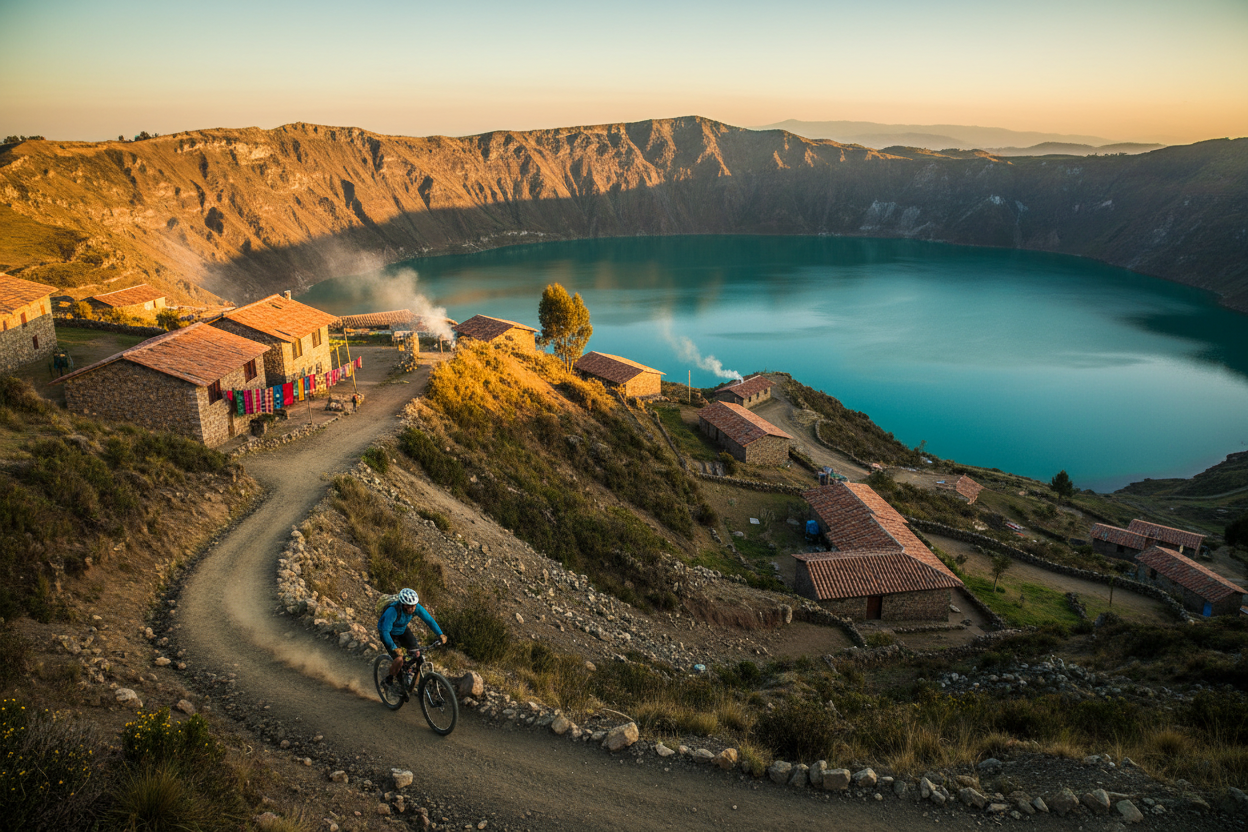
The centerpiece of this route is the stunning Quilotoa crater lake, a turquoise jewel nestled within an ancient volcanic caldera. The descent into the crater is steep and challenging, but the otherworldly beauty of the lake makes every difficult pedal stroke worthwhile. Local communities along the route offer homestay opportunities, allowing cyclists to experience authentic Andean culture while supporting local economies.
Market days in villages like Saquisilí and Zumbahua provide incredible cultural experiences. Timing your ride to coincide with these weekly gatherings offers glimpses into traditional Andean life that few tourists ever experience. The colorful textiles, fresh produce, and friendly interactions with local people create memories that extend far beyond the cycling itself.
Baños Adventure Hub: Waterfalls and Cloud Forest Trails
Baños de Agua Santa has earned its reputation as Ecuador’s adventure capital, and mountain biking plays a major role in that designation. Nestled in a valley below the active Tungurahua volcano, Baños offers an incredible variety of trails that traverse cloud forests, pass thundering waterfalls, and provide glimpses of volcanic activity.
The famous “Ruta de las Cascadas” (Waterfall Route) is a must-ride experience that takes cyclists past numerous spectacular waterfalls, including the impressive Pailón del Diablo. This route combines paved roads with dirt trails, making it accessible to riders of various skill levels. The constant sound of rushing water and the lush green vegetation create a sensory experience that’s uniquely Ecuadorian.
For more technical challenges, the trails leading up the flanks of Tungurahua offer steep climbs and technical descents through dense cloud forest. These routes require good bike handling skills and physical fitness, but they reward riders with incredible biodiversity and the chance to see volcanic activity up close when conditions permit.
Cuenca Region: Colonial Charm and Andean Beauty
The area surrounding Ecuador’s third-largest city offers a perfect blend of cultural exploration and mountain biking adventure. Cuenca’s UNESCO World Heritage colonial center provides an excellent base for exploring the surrounding Andean foothills and high-altitude trails.
Cajas National Park, located just outside Cuenca, presents some of Ecuador’s most challenging and rewarding high-altitude cycling. The park’s landscape of glacial lakes, rolling hills, and unique páramo vegetation creates an almost mystical riding environment. Trails here require good navigation skills, as the terrain can be confusing and weather conditions change rapidly.
The route to Ingapirca, Ecuador’s most significant Inca ruins, combines historical exploration with scenic cycling. This multi-day adventure takes riders through traditional farming communities and offers insights into both Inca and colonial history. The gradual elevation changes make it suitable for intermediate cyclists, while the cultural experiences along the way provide depth beyond just the physical challenge.
Safety Tips and Trail Navigation in the Andes
Mountain biking in the Andes requires a heightened awareness of safety considerations that might not apply to cycling in other regions. The combination of altitude, remote locations, and rapidly changing weather creates unique challenges that every cyclist should understand and prepare for.
Navigation can be particularly tricky in the Andes, where trails aren’t always well-marked and GPS devices can lose signal in deep valleys or during cloudy conditions. Always carry detailed topographic maps, inform someone of your planned route, and consider hiring local guides for unfamiliar areas. Many of the best trails pass through indigenous communities where asking for directions can lead to wonderful cultural exchanges.
Weather awareness is crucial for safe Andean cycling. Afternoon thunderstorms are common, especially during the rainy season from October to May. Lightning poses a serious threat at high elevations, so plan to complete exposed rides before early afternoon. Always carry rain gear and warm layers, as temperatures can drop dramatically with elevation or changing weather conditions.
Wildlife encounters, while generally positive, require some awareness. Andean bears are present in some areas, though encounters are extremely rare. More commonly, you might encounter aggressive dogs in rural communities. Carrying a small stick or rocks can help deter overly enthusiastic canines, but most are simply curious rather than threatening.
Best Times to Visit and Seasonal Considerations
Ecuador’s location on the equator means that seasonal variations are less dramatic than in other mountain regions, but timing your visit can still significantly impact your cycling experience. The dry season, roughly from June through September, generally offers the most reliable weather for mountain biking adventures.
During these months, morning skies are typically clear, providing excellent visibility for navigation and photography. Afternoon clouds still develop regularly, but precipitation is usually less intense and shorter in duration. Trail conditions are also generally better during the dry season, with less mud and more predictable surface conditions.
The wet season, from October through May, shouldn’t be completely dismissed for cycling adventures. While daily rainfall is more common, mornings are often clear, and the landscape becomes incredibly lush and green. Waterfalls are at their most spectacular during this period, and wildlife activity increases with the abundance of water and vegetation.
Altitude considerations remain constant throughout the year. The thin air at Andean elevations affects everyone differently, but proper acclimatization and gradual elevation gains help minimize altitude-related issues. Plan easier rides for your first few days, and listen to your body’s signals about when to push harder and when to take rest days.
Conclusion: Your Andean Cycling Adventure Awaits
Ecuador’s Andes offer mountain biking experiences that combine world-class trails with incredible cultural richness and natural beauty. From the volcanic landscapes of Cotopaxi to the colonial charm of Cuenca, every region provides unique adventures that will challenge your cycling skills while expanding your understanding of this remarkable country.
The key to a successful Andean cycling adventure lies in proper preparation, respect for local communities and environments, and maintaining flexibility in your plans. Weather, altitude, and trail conditions can all impact your daily rides, but these same factors contribute to the authentic adventure experience that makes Ecuador such a special destination.
Whether you’re planning a week-long expedition or a few day trips from major cities, Ecuador’s Andean trails offer something for every type of cyclist. The combination of challenging terrain, stunning scenery, and warm hospitality from local communities creates cycling memories that will last a lifetime. Start planning your Ecuadorian Andes mountain biking adventure today, and prepare to discover why this small South American country has become a world-renowned destination for two-wheeled exploration.