
Bhutan Travel: Discovering the History Behind the Dzongs
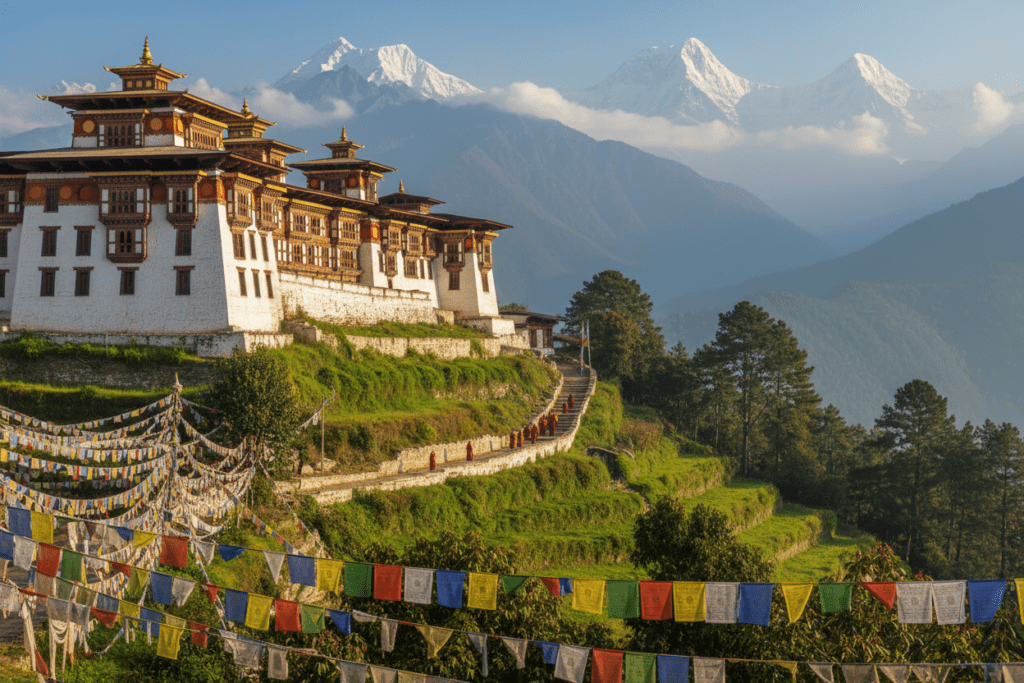
Imagine standing before a towering fortress that has watched over mountain valleys for centuries, its whitewashed walls gleaming against the dramatic backdrop of the Himalayas. This is what awaits you when you visit Bhutan’s magnificent dzongs – architectural marvels that serve as both spiritual centers and administrative headquarters, embodying the very soul of this mystical kingdom.
These fortress-monasteries are far more than mere buildings; they’re living testimonies to Bhutan’s rich history, unique culture, and unwavering Buddhist faith. As you plan your journey to the Land of the Thunder Dragon, understanding the fascinating stories behind these dzongs will transform your travel experience from simple sightseeing into a profound cultural immersion.
What Are Dzongs and Why Do They Matter?
The word “dzong” literally translates to “fortress” in Dzongkha, Bhutan’s national language, but these structures represent so much more than military strongholds. Built without a single nail or written architectural plan, dzongs showcase the incredible craftsmanship and engineering prowess of Bhutanese artisans who passed down their knowledge through generations.
Each dzong serves a dual purpose that perfectly reflects Bhutan’s unique approach to governance. During the day, these buildings function as administrative centers where government officials conduct the kingdom’s business. As evening approaches, they transform into active monasteries where monks gather for prayers, meditation, and religious ceremonies. This seamless blend of temporal and spiritual authority has been a cornerstone of Bhutanese society for over 400 years.
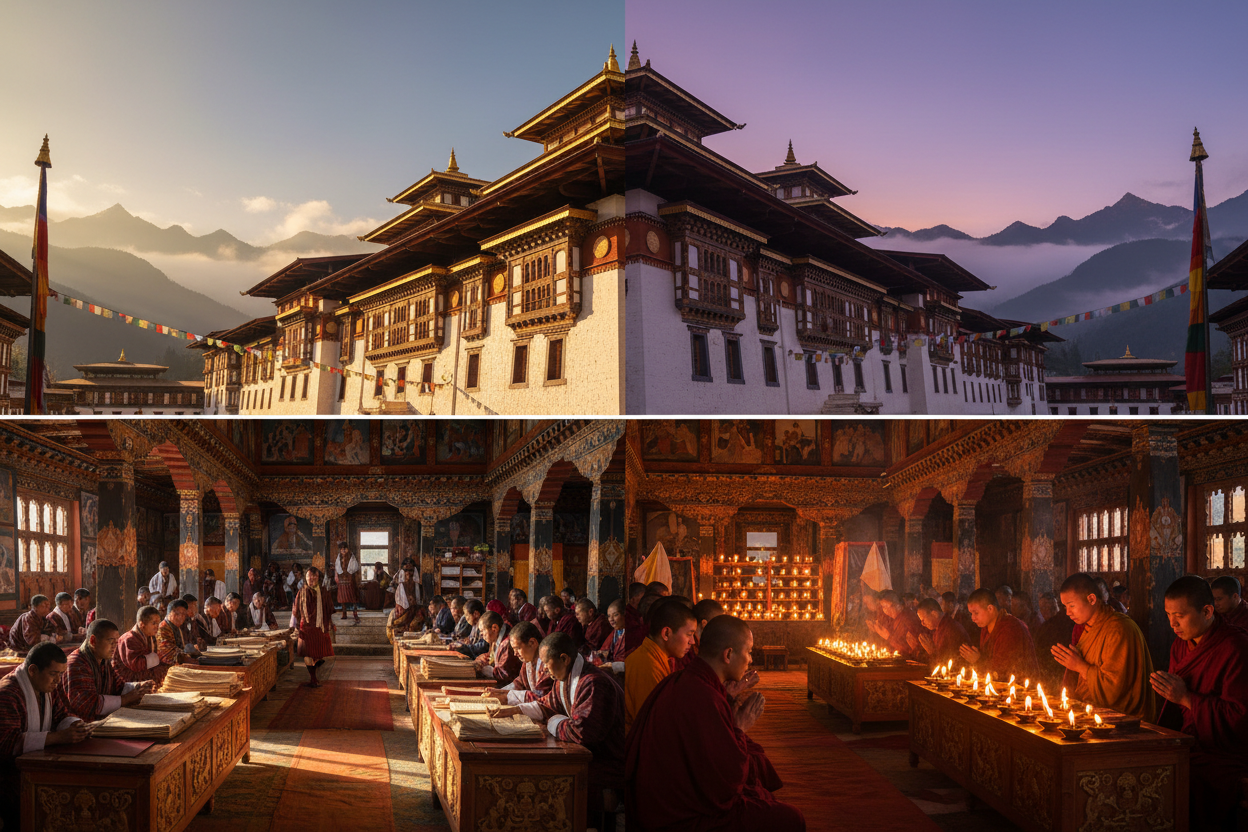
The strategic positioning of dzongs is no accident. Built on hilltops, at river confluences, or commanding valley entrances, they were designed to control trade routes and defend against invasions while also serving as symbols of power and religious devotion visible from great distances.
The Architectural Genius Behind Dzong Construction
Walking through a dzong feels like stepping into a medieval world where time has stood still. The traditional architecture follows strict principles that have remained unchanged for centuries, creating structures that are both functional and spiritually significant.
The distinctive sloping walls, painted in brilliant white with red and gold trim, aren’t just aesthetically pleasing – they’re earthquake-resistant features that have allowed these buildings to survive in one of the world’s most seismically active regions. The absence of nails in construction might seem impossible to modern minds, but Bhutanese master carpenters use an intricate system of joints, wooden pegs, and precise measurements that create structures more flexible and durable than many modern buildings.
Inside, you’ll discover courtyards that serve as gathering spaces for festivals and ceremonies, surrounded by multi-story buildings housing administrative offices, monks’ quarters, and sacred temples. The central tower, or utse, typically contains the most important religious artifacts and serves as the spiritual heart of the complex.
Punakha Dzong: The Palace of Great Bliss
Perhaps no dzong captures the imagination quite like Punakha Dzong, majestically situated at the confluence of two rivers in the former capital of Bhutan. Built in 1637 by Zhabdrung Ngawang Namgyal, the unifier of Bhutan, this dzong holds the distinction of being the second oldest and second largest in the kingdom.
The history embedded in Punakha Dzong’s walls is extraordinary. It served as the seat of government until 1955 and continues to house the sacred relics of the southern Drukpa lineage of the Kagyu school of Tibetan Buddhism. During winter months, the Je Khenpo (Chief Abbot of Bhutan) and the central monastic body relocate here from Thimphu, making it a living center of Buddhist practice.
What makes Punakha Dzong particularly special for visitors is its role in Bhutan’s royal history. The current King’s father was crowned here, and it remains the site where all Bhutanese kings are crowned. The dzong also houses the preserved body of Zhabdrung Ngawang Namgyal, though this fact wasn’t publicly revealed until 2002, having been kept secret for over 350 years.
Thimphu’s Tashichho Dzong: Where Tradition Meets Modernity
In Bhutan’s capital city, Tashichho Dzong represents the perfect harmony between ancient traditions and modern governance. Originally built in 1641 and extensively renovated in the 1960s, this dzong serves as the throne room and offices of the King of Bhutan, making it the de facto seat of government.
The renovation project, undertaken during the reign of the third King Jigme Dorji Wangchuck, demonstrates Bhutan’s commitment to preserving traditional architecture while adapting to contemporary needs. Master craftsmen from across the kingdom worked for years to expand the dzong using only traditional methods and materials, creating additional space for the growing bureaucracy while maintaining the structure’s spiritual significance.
Visitors to Tashichho Dzong can witness the daily rhythm of Bhutanese governance, where civil servants in traditional ghos and kiras work alongside monks in maroon robes. The dzong also houses the summer residence of the Je Khenpo and serves as the headquarters for Bhutan’s central monastic body, illustrating the continued integration of religious and secular authority.
Paro Rinpung Dzong: Guardian of the Valley
Perched dramatically above Paro town, Rinpung Dzong commands one of Bhutan’s most important valleys with an authority that has endured since 1646. The name “Rinpung” means “heap of jewels,” and this dzong truly lives up to its name with its stunning architecture and priceless religious artifacts.
This dzong played a crucial role in defending Bhutan against Tibetan invasions and later served as a fortress against British expeditions. The massive walls and strategic position made it nearly impregnable, while its religious significance ensured it remained a center of spiritual power even during times of conflict.
Today, Rinpung Dzong is perhaps best known to visitors as the venue for the spectacular Paro Tsechu, one of Bhutan’s most important religious festivals. During this annual celebration, the dzong’s courtyards come alive with masked dances, colorful costumes, and thousands of pilgrims who come to receive blessings and witness sacred ceremonies that have been performed for centuries.
The Spiritual Significance of Dzongs in Bhutanese Culture
Beyond their political and architectural importance, dzongs serve as spiritual anchors in Bhutanese communities. Each dzong houses sacred relics, ancient manuscripts, and religious artifacts that connect the present generation to their Buddhist heritage. The daily prayers and ceremonies conducted within these walls create an atmosphere of devotion that permeates the surrounding communities.
The positioning of dzongs also reflects deep spiritual beliefs about the landscape itself. Bhutanese tradition holds that certain locations possess special spiritual energy, and dzongs are built to harness and protect these sacred spaces. The relationship between the built environment and the natural world is carefully maintained, with dzongs designed to complement rather than dominate their surroundings.
For many Bhutanese, visiting their local dzong isn’t just an administrative necessity – it’s a spiritual practice. The act of walking through the gates, spinning prayer wheels, and offering butter lamps creates a connection between daily life and religious devotion that defines Bhutanese culture.
Planning Your Dzong Exploration Journey
When planning your visit to Bhutan’s dzongs, timing can significantly enhance your experience. The best months for dzong exploration are typically March through May and September through November, when clear skies provide stunning views of the surrounding mountains and comfortable temperatures make walking through these massive complexes enjoyable.
Each dzong has specific visiting hours and protocols that visitors should respect. Generally, dzongs are open to tourists during daylight hours, but certain areas may be restricted during religious ceremonies or government functions. Dress codes are strictly enforced – visitors should wear long pants and shirts with sleeves, and hats must be removed before entering any religious spaces.
Consider timing your visit to coincide with one of Bhutan’s major festivals, or tsechus, when dzongs become the focal points for elaborate celebrations. These events offer rare opportunities to witness centuries-old traditions in their authentic settings, though they also attract larger crowds and require advance planning.
Preserving History for Future Generations
The preservation of Bhutan’s dzongs represents one of the kingdom’s greatest cultural achievements. In an era of rapid modernization, Bhutan has maintained strict building codes that require all new construction to follow traditional architectural principles. This commitment ensures that dzongs continue to dominate their landscapes as they have for centuries.
The Bhutanese government works closely with UNESCO and other international organizations to maintain these structures using traditional methods and materials. Master craftsmen train new generations in ancient techniques, ensuring that the knowledge required to maintain dzongs doesn’t disappear in our digital age.
Climate change and increasing tourism present new challenges for dzong preservation. Rising temperatures affect traditional building materials, while growing visitor numbers require careful management to prevent damage to these irreplaceable structures. Bhutan’s policy of “high value, low impact” tourism helps address these concerns by limiting visitor numbers while ensuring that tourism revenue supports conservation efforts.
Visiting Bhutan’s dzongs offers more than just spectacular photo opportunities – it provides a window into a civilization that has successfully balanced tradition with progress, spirituality with governance, and preservation with adaptation. These magnificent fortress-monasteries stand as testaments to human ingenuity, religious devotion, and cultural continuity in an increasingly homogenized world.
As you plan your journey to the Land of the Thunder Dragon, remember that each dzong you visit carries within its walls centuries of history, countless prayers, and the hopes of a people who have chosen to measure progress not just in economic terms, but in the preservation of their cultural soul. The stories these ancient stones tell will stay with you long after you return home, serving as reminders of a place where the past and present coexist in remarkable harmony.