
Ecuador Travel: Discovering the Best Road Trip Routes Through South America’s Hidden Gem
Ecuador might be one of South America’s smallest countries, but don’t let its size fool you. This incredible nation packs more diversity per square mile than almost anywhere else on Earth. From the snow-capped peaks of the Andes to the steamy Amazon rainforest, from colonial cities frozen in time to pristine Pacific beaches, Ecuador offers road trippers an unforgettable journey through dramatically different landscapes and cultures.
I’ve spent countless hours navigating Ecuador’s winding mountain roads, coastal highways, and jungle paths, and I can tell you that few countries offer such rewarding road trip experiences in such a compact area. Whether you have a week or a month to explore, Ecuador’s well-connected road network makes it possible to experience incredible diversity without spending days driving between destinations.
The Classic Andes Adventure: Quito to Cuenca via the Avenue of Volcanoes
The most iconic Ecuador road trip follows the spine of the country through the Avenue of Volcanoes, a route that Alexander von Humboldt famously described as one of the most beautiful in the world. This 450-kilometer journey from Quito to Cuenca takes you through the heart of the Ecuadorian Andes, past towering volcanic peaks, indigenous markets, and colonial towns that seem untouched by time.
Starting in Quito, Ecuador’s capital and a UNESCO World Heritage site, you’ll immediately understand why this city captivates visitors. The historic center, with its baroque churches and colonial mansions, provides the perfect introduction to Ecuador’s rich cultural heritage. Before heading south, spend at least two days exploring Quito’s cobblestone streets and sampling local specialties like hornado and cuy.
The drive south on the Pan-American Highway reveals Ecuador’s geological drama. Cotopaxi National Park, just 50 kilometers from Quito, offers your first glimpse of the country’s volcanic majesty. The perfectly conical Cotopaxi volcano, standing at 5,897 meters, dominates the landscape and provides excellent hiking opportunities for those wanting to stretch their legs.
Continuing south, make sure to stop in Latacunga, a charming market town that serves as a gateway to the Quilotoa Loop. This detour adds about 200 kilometers to your journey but rewards you with one of Ecuador’s most spectacular sights: the Quilotoa crater lake. The turquoise waters nestled in an ancient volcanic crater create a scene so surreal it hardly seems real.
The indigenous markets of Saquisili and Zumbahua offer authentic cultural experiences where you can witness traditional Andean life continuing much as it has for centuries. The Thursday market in Saquisili is particularly vibrant, with locals in traditional dress trading everything from guinea pigs to handwoven textiles.
Your final destination, Cuenca, rewards the long mountain drive with its perfectly preserved colonial architecture and relaxed atmosphere. Often called Ecuador’s most beautiful city, Cuenca’s red-tiled roofs, flower markets, and riverside setting make it an ideal place to rest and reflect on your Andean adventure.
Pacific Coast Paradise: Manta to Montanita Beach Route
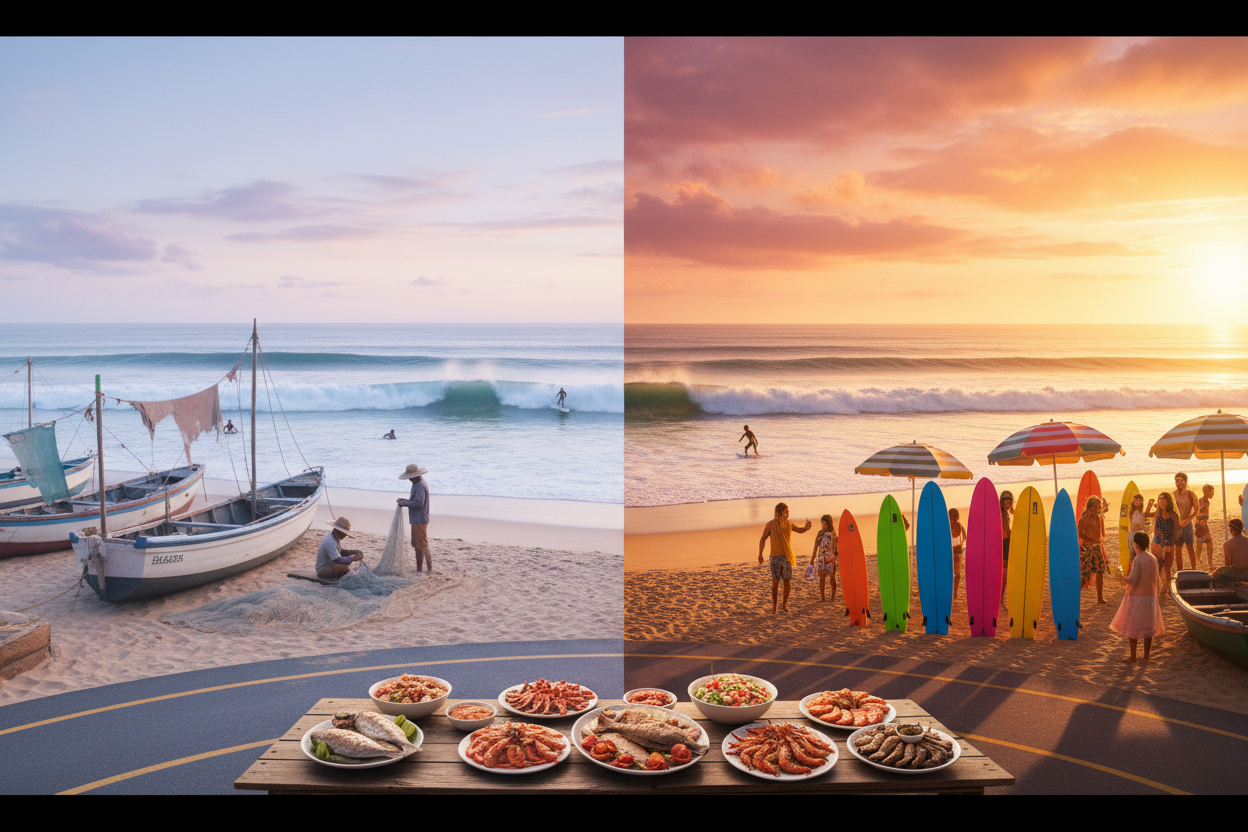
Ecuador’s Pacific coast offers a completely different road trip experience, trading mountain vistas for endless ocean views, fresh seafood, and some of South America’s best surf breaks. The coastal route from Manta to Montanita covers approximately 200 kilometers of Ecuador’s most scenic coastline, with opportunities to spot humpback whales, sample incredible ceviche, and experience the laid-back beach culture that defines coastal Ecuador.
Manta, Ecuador’s second-largest port city, serves as an excellent starting point for coastal exploration. While not particularly scenic itself, Manta offers authentic coastal culture and serves as the departure point for whale watching tours during migration season (June through September). The city’s fish market provides an excellent introduction to Ecuador’s incredible seafood diversity.
Driving south along Route E15, your first major stop should be Puerto Lopez, often called the “Poor Man’s Galapagos” due to its incredible marine biodiversity. This small fishing village serves as the gateway to Machalilla National Park, where pristine beaches meet dry tropical forest. The nearby Isla de la Plata offers day trips with opportunities to see blue-footed boobies, frigatebirds, and other seabirds that also inhabit the Galapagos.
The road between Puerto Lopez and Montanita passes through some of Ecuador’s most dramatic coastal scenery. Steep cliffs drop directly into the Pacific, creating viewpoints that rival California’s Big Sur. Small fishing villages dot the coastline, each offering fresh seafood and glimpses into traditional coastal life.
Your journey culminates in Montanita, Ecuador’s surf capital and backpacker haven. This small beach town transforms from sleepy fishing village to international party destination, attracting surfers from around the world who come for consistent waves and vibrant nightlife. Even if you don’t surf, Montanita’s beach culture, fresh seafood, and stunning sunsets make it a perfect place to unwind after days of driving.
Amazon Adventure: Baños to Tena Jungle Highway
For those seeking adventure beyond beaches and mountains, the road from Baños to Tena offers an incredible descent from the Andes into the Amazon basin. This 150-kilometer journey, known as one of Ecuador’s most scenic drives, takes you through cloud forests, past thundering waterfalls, and into the heart of the world’s most biodiverse ecosystem.
Baños, situated at 1,820 meters above sea level, serves as Ecuador’s adventure capital. This small city, nestled between the Tungurahua volcano and the Amazon basin, offers everything from bungee jumping to volcano tours. The town’s thermal springs, fed by volcanic activity, provide a relaxing way to prepare for your jungle adventure.
The drive from Baños toward the Amazon follows the Pastaza River valley, descending through multiple climate zones in just a few hours. The route passes numerous waterfalls, including the spectacular Pailon del Diablo, where you can stop to hike and swim in natural pools. The changing vegetation tells the story of your descent: from Andean grasslands to cloud forest to tropical rainforest.
As you approach Puyo, the landscape transforms completely. The air becomes humid and thick, filled with the sounds of tropical birds and insects. Puyo serves as a gateway to the deeper Amazon, offering opportunities for jungle tours, indigenous cultural experiences, and wildlife observation.
Tena, your final destination, sits in the heart of Ecuador’s Amazon region. This small city serves as a launching point for deeper jungle exploration, white-water rafting on the Napo River, and visits to indigenous communities. The surrounding rainforest teems with wildlife, including jaguars, anacondas, and hundreds of bird species.
Essential Road Trip Planning Tips for Ecuador
Planning a successful Ecuador road trip requires understanding the country’s unique challenges and opportunities. The dramatic elevation changes mean you’ll experience multiple climate zones in a single day, so pack layers and be prepared for everything from tropical heat to mountain cold.
Ecuador’s road infrastructure varies significantly by region. The Pan-American Highway and major coastal routes are generally well-maintained, while secondary mountain roads and jungle highways can be challenging, especially during rainy season (October through May). A 4WD vehicle isn’t always necessary, but it provides peace of mind on unpaved sections.
Fuel availability is generally good along major routes, but it’s wise to fill up whenever possible, especially when heading into remote areas. Ecuador uses the US dollar as its official currency, making budgeting easier for North American travelers.
Safety considerations include altitude sickness when traveling in the Andes (ascend gradually and stay hydrated), and being aware of weather conditions, particularly during rainy season when landslides can temporarily close mountain roads.
Best Times to Hit the Road in Ecuador
Ecuador’s location on the equator means it doesn’t experience traditional seasons, but regional weather patterns significantly impact road trip conditions. The dry season (June through September) offers the most reliable weather for mountain driving, with clear skies providing spectacular volcano views and minimal risk of road closures.
Coastal regions are pleasant year-round, though the period from December to April brings warmer temperatures and occasional afternoon showers. This is also whale watching season, making it an excellent time for the Pacific coast route.
The Amazon region experiences high rainfall year-round, but the “dry” season (December through March) offers slightly better road conditions and increased wildlife activity as animals congregate around water sources.
Conclusion: Ecuador’s Road Trip Magic Awaits
Ecuador’s compact size and incredible diversity make it one of the world’s premier road trip destinations. Whether you choose to follow ancient trade routes through the Andes, surf world-class waves along the Pacific coast, or venture deep into the Amazon rainforest, Ecuador’s roads lead to unforgettable adventures.
The country’s excellent road network means you can experience snow-capped volcanoes, colonial cities, pristine beaches, and primary rainforest all within a few days of driving. Few destinations offer such dramatic landscape changes and cultural diversity in such an accessible package.
Start planning your Ecuador road trip today, and prepare to discover why this small South American nation captures the hearts of every traveler who explores its winding roads and hidden treasures. The adventure of a lifetime awaits around every mountain curve and coastal bend.