
Africa Travel: Discovering the Architectural Wonders of Ethiopia
When most travelers think of African architecture, images of ancient Egyptian pyramids or South African colonial buildings might come to mind. However, nestled in the Horn of Africa lies a country with some of the most extraordinary and unique architectural treasures on the continent. Ethiopia, often called the “Roof of Africa,” boasts an incredible collection of ancient churches, medieval castles, and mysterious structures that have captivated visitors for centuries. From the world-famous rock-hewn churches of Lalibela to the imposing castles of Gondar, Ethiopia’s architectural heritage tells a story of faith, ingenuity, and cultural resilience that spans over a millennium.
What makes Ethiopian architecture truly remarkable is not just its age or beauty, but the way it seamlessly blends indigenous African traditions with influences from the Mediterranean, Middle East, and beyond. This unique fusion has created architectural marvels that you simply cannot find anywhere else in the world. For travelers seeking authentic cultural experiences and breathtaking historical sites, Ethiopia offers an unparalleled journey through time and craftsmanship.
The Legendary Rock Churches of Lalibela: Africa’s New Jerusalem
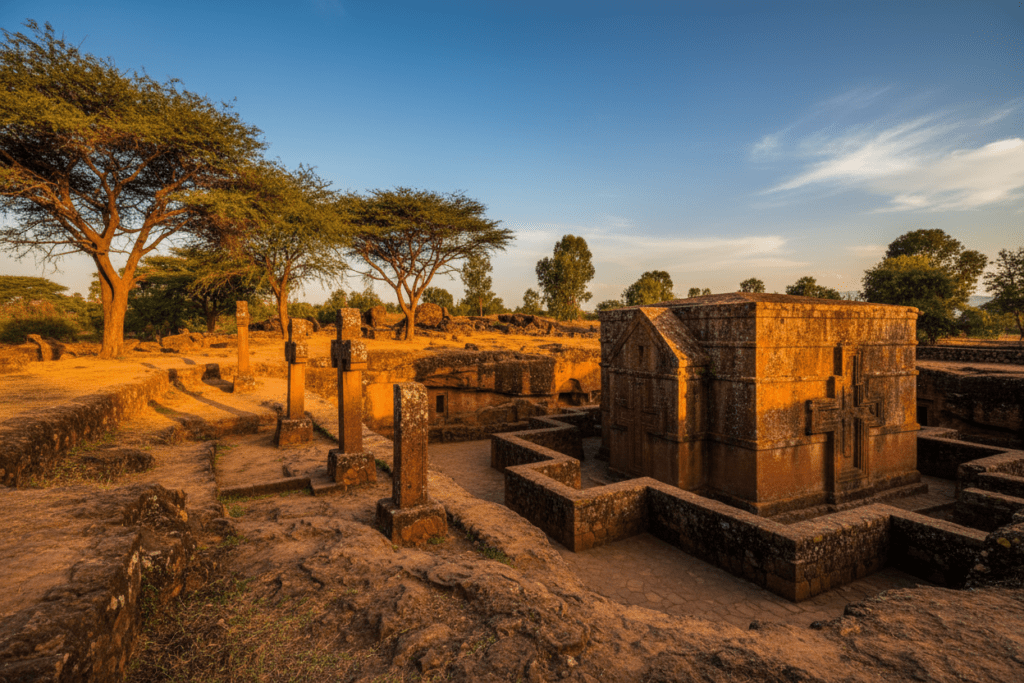
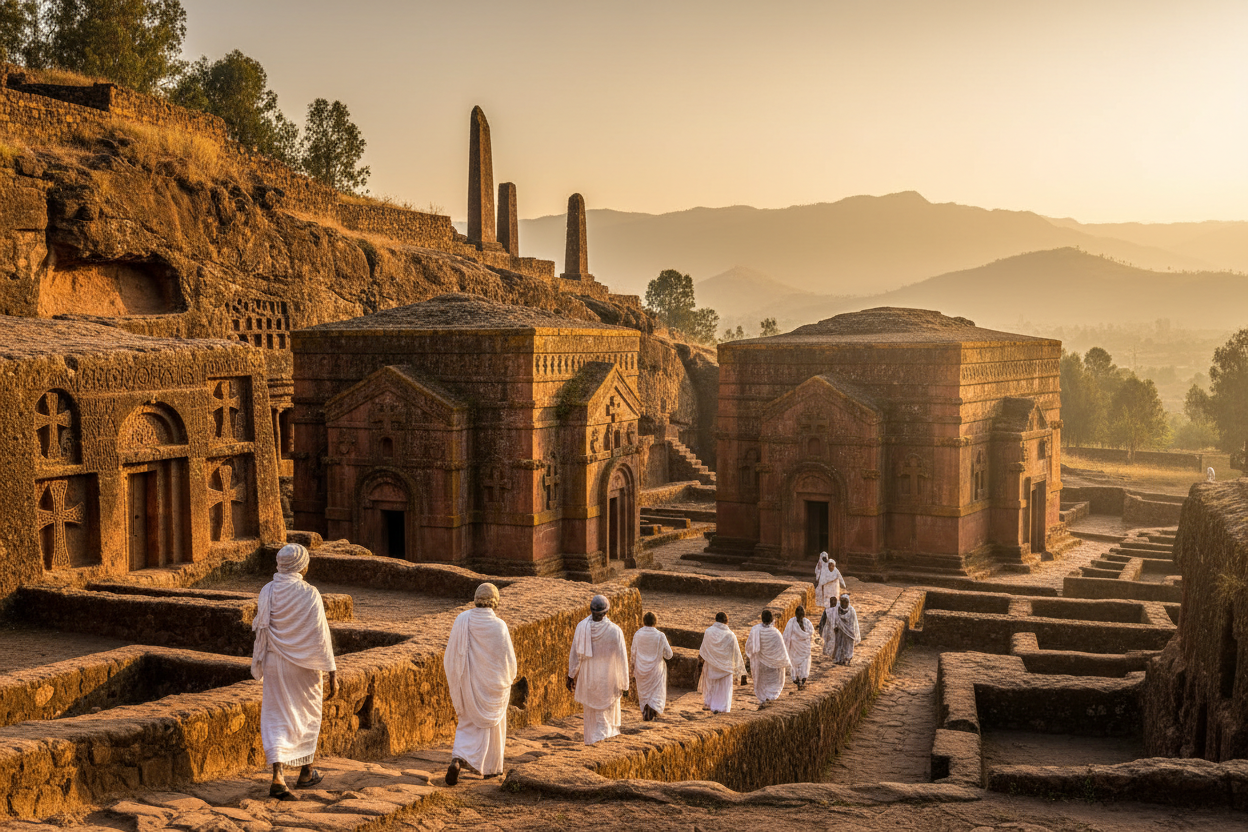
No discussion of Ethiopian architecture would be complete without starting with Lalibela, arguably the crown jewel of the country’s architectural heritage. This UNESCO World Heritage site contains eleven remarkable churches carved directly from solid volcanic rock during the 12th and 13th centuries. What sets these churches apart from other ancient structures worldwide is that they were carved downward from the surface, creating buildings that are literally part of the earth itself.
The most famous of these churches is the Church of St. George, known locally as Bet Giyorgis. This perfectly symmetrical cross-shaped church stands as a masterpiece of medieval engineering and artistry. When you first glimpse it from the viewing platform above, the sight is genuinely breathtaking. The precision of the carving, the intricate details of windows and doors, and the sheer audacity of the construction method leave visitors speechless.
Legend has it that King Lalibela commissioned these churches after a divine vision instructed him to build a “New Jerusalem” in Ethiopia. Whether driven by divine inspiration or royal ambition, the result is a complex of churches that continues to serve as an active pilgrimage site for Ethiopian Orthodox Christians. During major religious festivals like Timkat (Ethiopian Epiphany), thousands of white-robed pilgrims gather here, creating an atmosphere that feels both ancient and vibrantly alive.
What makes visiting Lalibela even more special is the way the churches are integrated into daily life. These aren’t museum pieces behind ropes and glass – they’re living, breathing places of worship where you can witness centuries-old religious traditions continuing unchanged. The sound of ancient chants echoing from the carved chambers, the sight of priests in colorful robes conducting services, and the devotion of local worshippers create an experience that touches something deep within every visitor.
Gondar’s Royal Enclosure: The Camelot of Africa
Moving north from Lalibela, travelers encounter another architectural wonder that showcases a completely different side of Ethiopian craftsmanship: the Royal Enclosure of Gondar. Founded in the 17th century by Emperor Fasilides, Gondar served as Ethiopia’s capital for over 200 years and became known as the “Camelot of Africa” due to its impressive collection of castles and palaces.
The centerpiece of Gondar is Fasil Ghebbi, a fortress-city containing six major castles and numerous other buildings within a 900-meter perimeter wall. The architecture here reflects Ethiopia’s unique position as a crossroads of civilizations, blending Portuguese, Moorish, and indigenous Ethiopian styles into something entirely distinctive. The massive stone walls, crenellated towers, and arched windows create a skyline that wouldn’t look out of place in medieval Europe, yet the decorative elements and proportions are unmistakably African.
Emperor Fasilides’ castle, the oldest and most impressive of the structures, rises three stories high with thick stone walls that have withstood centuries of weather and conflict. The building’s design incorporates both defensive features and royal comfort, with spacious halls for state functions and private chambers for the royal family. The attention to detail in the stonework, from the precisely cut blocks to the ornate window frames, demonstrates the high level of craftsmanship achieved by Ethiopian builders.
Beyond the main castle complex, Gondar offers other architectural treasures that showcase the city’s golden age. The Debre Berhan Selassie Church, with its famous ceiling covered in the faces of winged cherubs, represents the pinnacle of Ethiopian religious art and architecture. The church’s walls are adorned with vibrant frescoes depicting biblical scenes, saints, and Ethiopian religious figures, creating an immersive visual experience that has inspired visitors for generations.
Axum’s Ancient Obelisks: Monuments to a Lost Empire
In the northern reaches of Ethiopia lies Axum, once the capital of a powerful trading empire that controlled commerce between the Roman Empire and Ancient India. Today, this ancient city is home to some of Africa’s most mysterious and impressive monuments: towering granite obelisks that have stood sentinel over the landscape for over 1,700 years.
The Axum obelisks, or stelae as they’re technically known, represent a unique form of funerary architecture that reached extraordinary heights of sophistication. The largest standing obelisk, known as the Obelisk of Axum, rises 24 meters into the sky and weighs an estimated 160 tons. What makes these monuments truly remarkable is not just their size, but their intricate carving that mimics multi-story buildings complete with doors, windows, and decorative elements.
These granite giants were carved from single blocks of stone and transported from quarries several kilometers away – an engineering feat that continues to puzzle archaeologists and engineers today. The precision of the carving work, achieved without modern tools, demonstrates the advanced technical skills of Axumite craftsmen. Each obelisk tells a story through its carved facades, representing the houses or palaces that the deceased would inhabit in the afterlife.
The return of the Axum Obelisk from Rome in 2005, where it had stood since being looted by Italian forces in 1937, marked a significant moment in Ethiopian cultural heritage. Watching this 1,700-year-old monument being carefully reassembled in its original location was an emotional experience for many Ethiopians and highlighted the ongoing importance of these ancient structures to national identity.
Harar’s Jugol: A Living Medieval City
In eastern Ethiopia, the ancient walled city of Harar presents yet another facet of the country’s architectural diversity. Known as the fourth holiest city in Islam, Harar’s old town, called Jugol, is enclosed within walls dating to the 13th century and contains what many consider to be the finest example of Islamic architecture in Ethiopia.
The narrow, winding streets of Jugol are lined with traditional Harari houses characterized by their distinctive architectural features: colorful facades, intricately carved wooden balconies, and interior courtyards that provide privacy and cooling in the hot climate. These houses represent a unique architectural tradition that has evolved over centuries to perfectly suit the local environment and cultural needs.
What makes Harar’s architecture particularly fascinating is how it reflects the city’s role as a major trading hub connecting the Ethiopian highlands with the ports of the Red Sea and Indian Ocean. The influence of Arab, Turkish, and Indian architectural styles can be seen throughout the city, yet they’ve been adapted and transformed to create something distinctly Harari. The result is a living museum where traditional architectural techniques continue to be practiced and preserved by local craftsmen.
The city’s 82 mosques, many dating back several centuries, showcase the evolution of Islamic architecture in the region. From simple, austere prayer halls to more elaborate structures with decorated minarets and intricate geometric patterns, these buildings demonstrate how religious architecture adapted to local materials, climate, and artistic traditions while maintaining its spiritual function.
Discovering Ethiopia’s Architectural Heritage: A Traveler’s Guide
Experiencing Ethiopia’s architectural wonders requires some planning, but the rewards are immeasurable. The best time to visit is during the dry season from October to May, when roads are more accessible and weather conditions are favorable for exploring outdoor sites. Many of Ethiopia’s architectural treasures are located at high altitudes, so visitors should allow time to acclimatize, especially when traveling to places like Lalibela at over 2,600 meters above sea level.
Transportation between sites can be challenging but is part of the adventure. Domestic flights connect major cities, while road travel offers opportunities to see the stunning landscapes that form the backdrop to these architectural marvels. The journey between sites often proves as memorable as the destinations themselves, with dramatic mountain scenery, rural villages, and encounters with local people who maintain deep connections to these ancient places.
When visiting these architectural sites, it’s important to approach them with respect and cultural sensitivity. Many are active religious sites where photography may be restricted or require permission. Hiring local guides not only supports the community but also provides invaluable insights into the history, symbolism, and ongoing significance of these structures. These guides often share stories and details that bring the stones to life in ways that guidebooks simply cannot match.
The architectural wonders of Ethiopia offer more than just impressive buildings and engineering feats. They provide windows into the soul of a civilization that has maintained its independence and cultural identity for millennia. Each site tells part of a larger story about human creativity, spiritual devotion, and the endless capacity for societies to create beauty and meaning through architecture. For travelers seeking destinations that offer both visual splendor and deep cultural significance, Ethiopia’s architectural heritage provides an experience that will resonate long after the journey ends.
From the mystical churches of Lalibela to the royal grandeur of Gondar, from the ancient mysteries of Axum to the living traditions of Harar, Ethiopia presents an architectural journey unlike any other on the African continent. These structures stand not just as monuments to the past, but as bridges connecting visitors to the enduring spirit of one of humanity’s oldest and most fascinating civilizations.